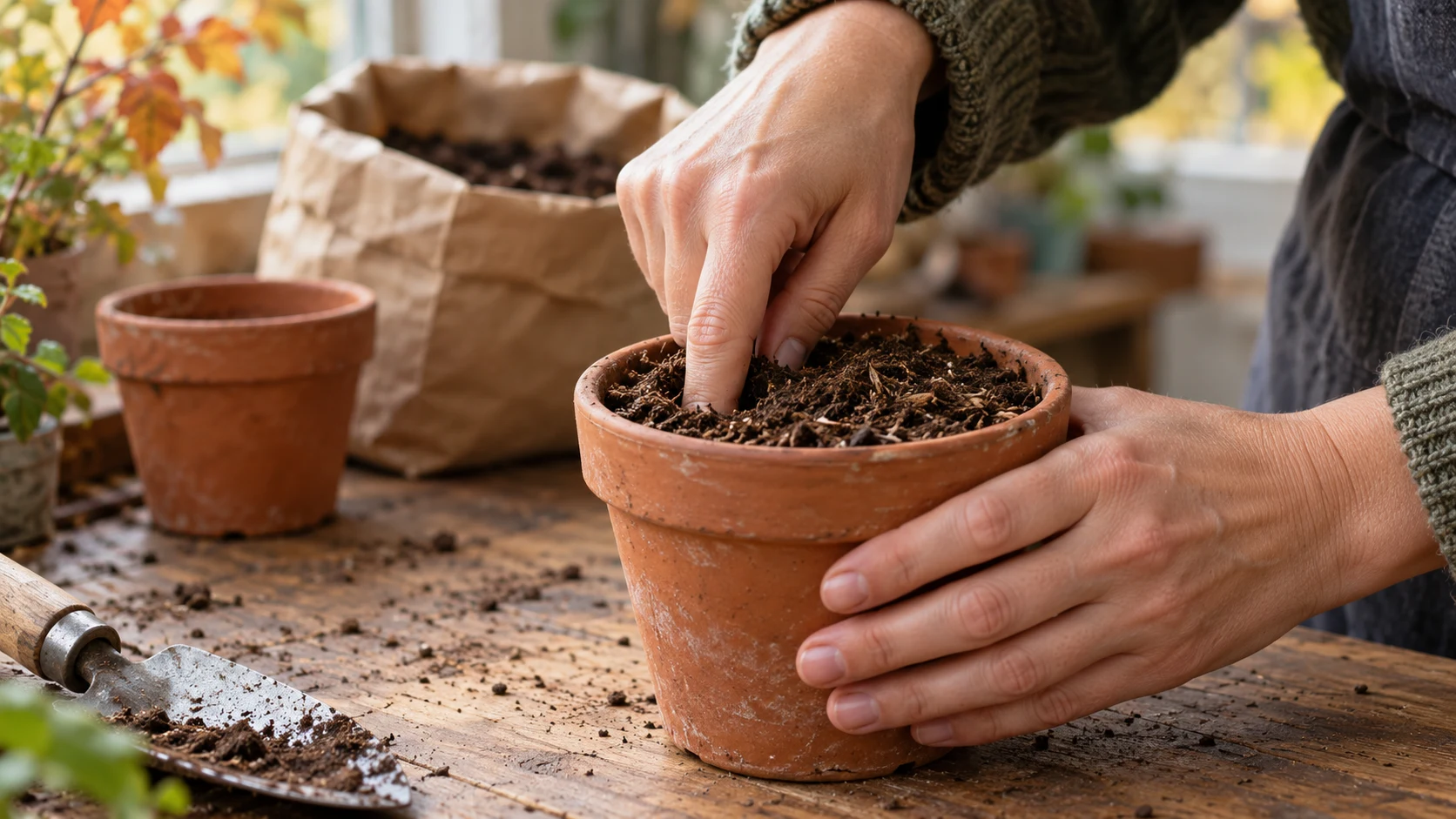
Peat-Free Compost: Choosing a Blend, Watering and Feeding
Choose peat-free compost for the plant and its purpose. Learn how to check moisture, read feeding instructions and avoid unnecessary extra fertiliser.
Choose peat-free compost for the plant and its purpose. Learn how to check moisture, read feeding instructions and avoid unnecessary extra fertiliser.
Quick answer: Shape gives it away. Round dead spots with a dark green ring around them are almost always dog urine. Large, uneven tan patches in July–August that spring back within a day or two of deep watering are drought stress. Circular patches with a smoky purple-gray border in hot, humid weather point to brown…
Quick answer: The summer pruning window runs roughly from midsummer through early autumn, once a tree or shrub’s most vigorous spring growth has slowed but while it still has enough of the growing season left to heal the cut. It suits deciduous ”bleeders” like maples, birches and dogwoods, most established shade trees, hedges, and stone…
Quick answer: For most cool-season lawns, the correct mowing height is 6–8 cm (2.5–3 in) during the regular growing season, raised to 8–9 cm (3–3.5 in) in shade or drought, and lowered to about 5–6 cm (2–2.5 in) only for the final cut of the year. Never remove more than a third of the blade…
Quick answer: The best secateurs (called pruning shears in the US) depend on what you actually cut. Bypass secateurs, which work like scissors, give the cleanest cuts on living growth and are the right default for roses, shrubs and fruit trees. Anvil secateurs, which press a single blade onto a flat plate, handle dead or…
Quick answer: A greenhouse earns its keep growing what genuinely needs the extra heat and a longer season – tomatoes, cucumbers, chillies, peppers, aubergines and melons. Heat-sensitive herbs like basil, coriander and lemongrass also do far better under cover than outdoors. Lettuce, spinach and radishes are ideal for the shoulder seasons, filling the space before…
Moss in a lawn almost always means shade, compacted or poorly drained soil, low soil pH, or grass that’s already thin from low fertility or mowing too short. Rake or scarify it out, ideally in early autumn while the grass is still growing, oversow the bare patches straight away, and fix the underlying cause —…