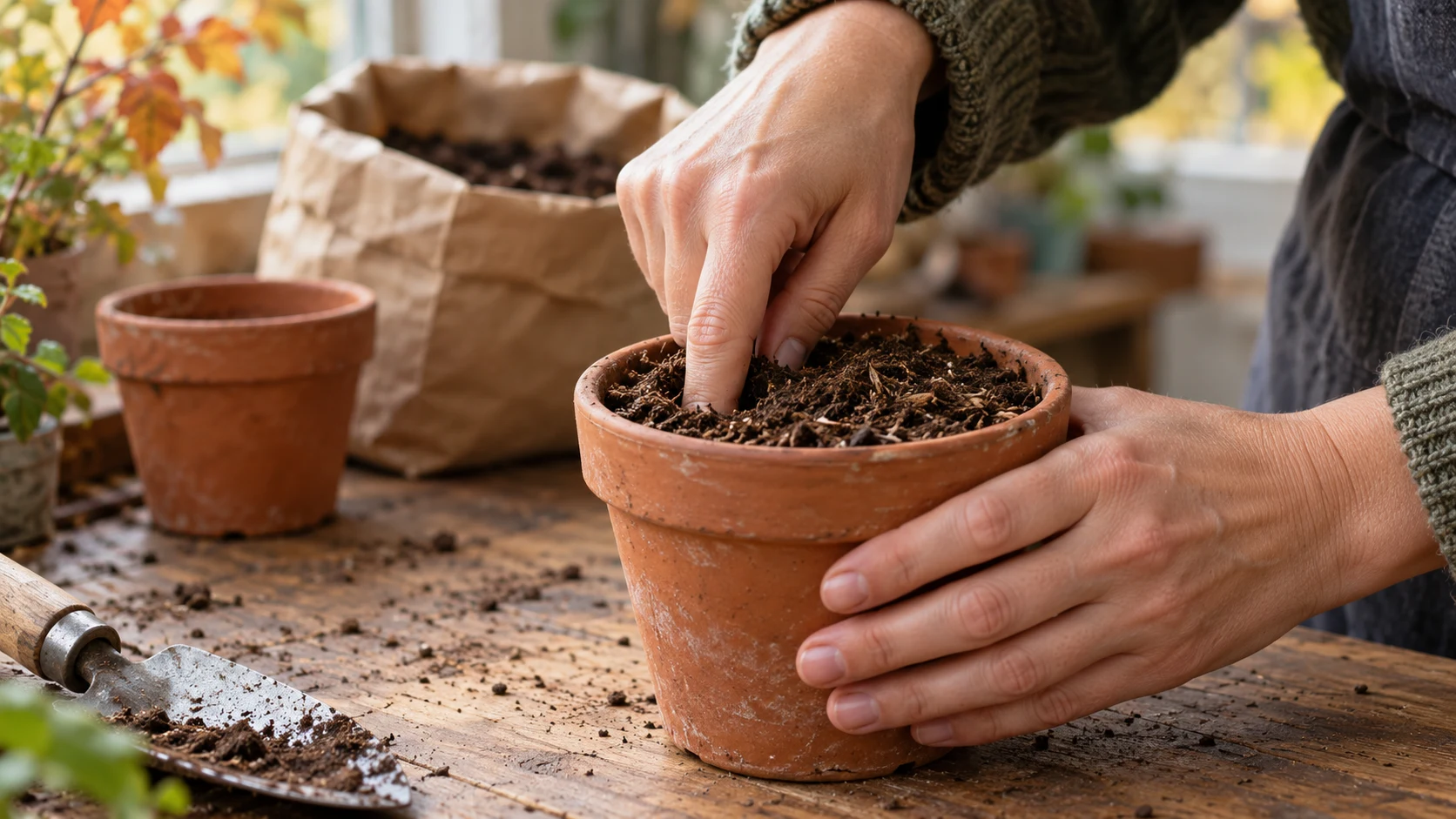
Peat-Free Compost: Choosing a Blend, Watering and Feeding
Choose peat-free compost for the plant and its purpose. Learn how to check moisture, read feeding instructions and avoid unnecessary extra fertiliser.
Choose peat-free compost for the plant and its purpose. Learn how to check moisture, read feeding instructions and avoid unnecessary extra fertiliser.
Quick answer: For fast privacy, arborvitae, privet or hornbeam are the best hedge plants – clip once or twice a year and expect 1.5-2 m (5-6.5 ft) in about 3-5 years. For a tighter, formal hedge that takes hard pruning, choose yew or boxwood instead, though both grow much more slowly and need closer watching…
Quick answer: Arborvitae, privet and hornbeam are the most reliable fast-growing hedges, typically adding 30–40 cm (12–16 in) a year and reaching 1.5–2 m (5–6.5 ft) of privacy in about 3–5 years. If you want even faster coverage and don’t mind a looser, less formal shape, elderberry and serviceberry often outgrow them, but both need…
Quick answer: For fast results, arborvitae, privet and Virginia creeper on an existing fence can all deliver real privacy within two to three seasons. For a lower-maintenance evergreen screen that takes longer, yew and holly are worth the wait. In containers, clumping bamboo (Fargesia) and clematis on a trellis are the most reliable choices. Combining…
Quick answer: The best small garden trees mature at 3–6 m (10–20 ft) and generally need 2–3 m (6–10 ft) of clearance from a foundation, more on heavy clay. Multi-stem serviceberry, globe Norway maple and columnar flowering cherry are dependable choices through USDA zones 4–7, while Japanese maple and the Judas tree need a sheltered,…
Quick answer: Scarify a lawn once a year, ideally in mid-spring or late summer to early fall, when the soil is moist but not soggy and the grass is actively growing. Set the blades 3–5 mm (about 1/8 inch) into the turf for light thatch, up to 8 mm (1/3 inch) for heavy moss. Aerate…
Quick answer: Prune cherry trees in summer, right after harvest, never during winter dormancy — dormant pruning sharply raises the risk of bacterial canker and silver leaf. Sweet cherries fruit on long-lived spurs and only need light, structural pruning once established. Tart (sour) cherries fruit mostly on one-year-old wood and need yearly renewal pruning, removing…