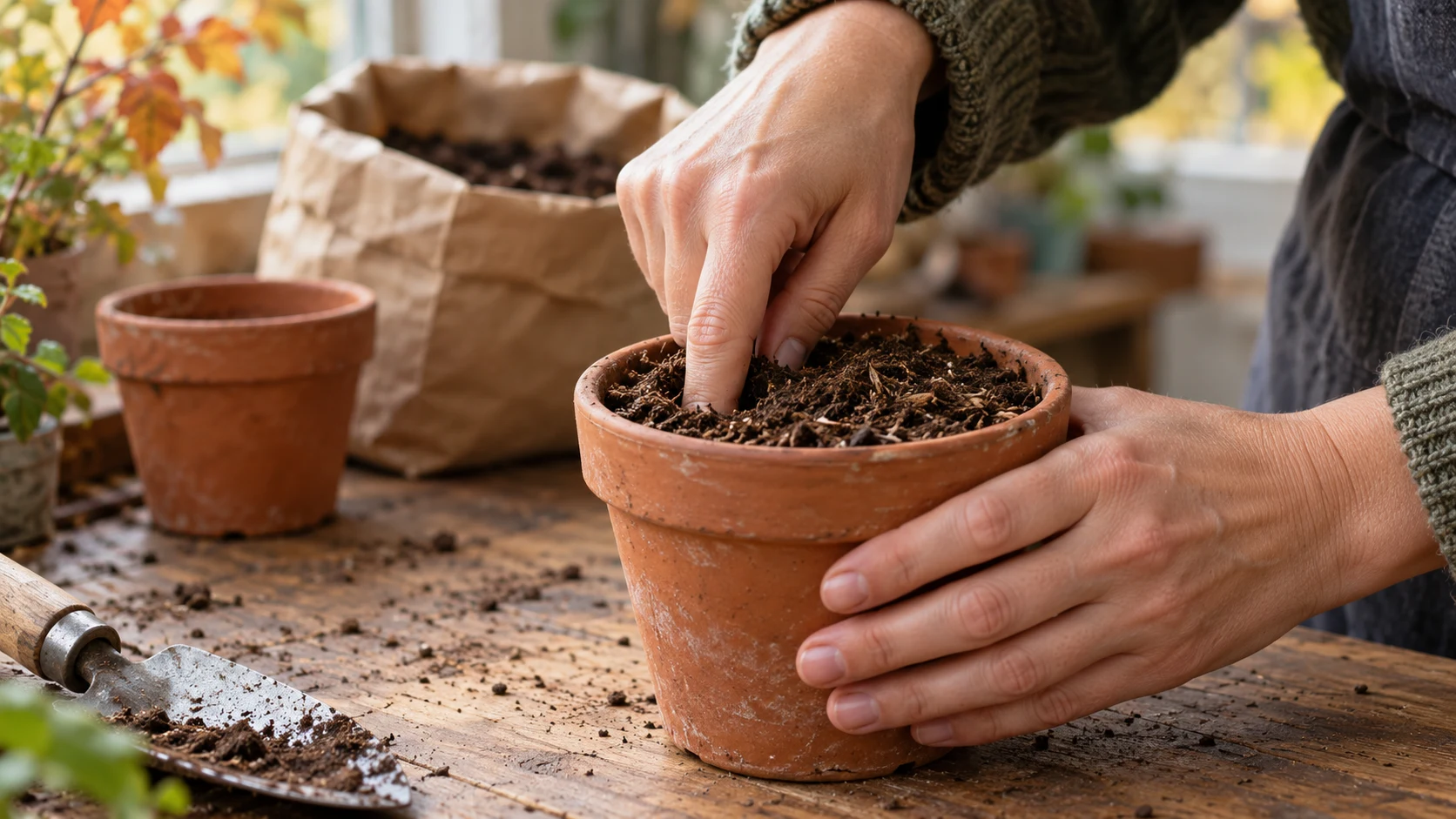
Peat-Free Compost: Choosing a Blend, Watering and Feeding
Choose peat-free compost for the plant and its purpose. Learn how to check moisture, read feeding instructions and avoid unnecessary extra fertiliser.
Choose peat-free compost for the plant and its purpose. Learn how to check moisture, read feeding instructions and avoid unnecessary extra fertiliser.
Quick answer: For most home gardeners, an aluminum-framed greenhouse glazed with twin-wall polycarbonate is the safest all-round choice — it insulates better than glass, weighs less, and won’t shatter if a branch or hailstone hits it. Plan on roughly 60–80 sq ft (6–8 m²) if you want benches on both sides with room to move.…
Quick answer: Most lawn weeds are broadleaf plants like dandelion, clover, and plantain, or grassy weeds like crabgrass and quackgrass, and both usually move in where the grass is already thin. Pull small numbers by hand, roots included, mow no shorter than 3 inches (7.5 cm), and feed the lawn in spring so it can…
Quick answer: There’s no single ”best” greenhouse — only the one that matches how you’ll actually use it. A budget mini greenhouse or poly tunnel for $100–$600 is fine for testing whether greenhouse growing suits you. Mid-range aluminum-and-polycarbonate kits, roughly $600–$6,000, are what most home gardeners end up buying and typically last 10–20 years. Above…
Quick answer: Plant thuja in spring or early fall, spacing plants 60–150 cm (2–5 ft) apart depending on the variety and how fast you want the hedge to fill in. Dig a hole as deep as the root ball and twice as wide, water deeply and consistently through the first two growing seasons, and feed…
Quick answer: Rake up winter debris as soon as the ground is workable, but hold off on fertilizing, liming and dethatching until the grass itself is actively growing — timing varies by climate zone. Make the first cut once the grass reaches about 3 in (7–8 cm) and never remove more than a third of…
Quick answer: Browning thuja (arborvitae) is usually one of five things: normal fall needle drop on the oldest inner growth, drought stress, waterlogged roots, winter burn from cold wind and sun, or de-icing salt. If only the innermost needles brown over 3–4 weeks each autumn, that’s normal aging. If whole branches, one entire side, or…