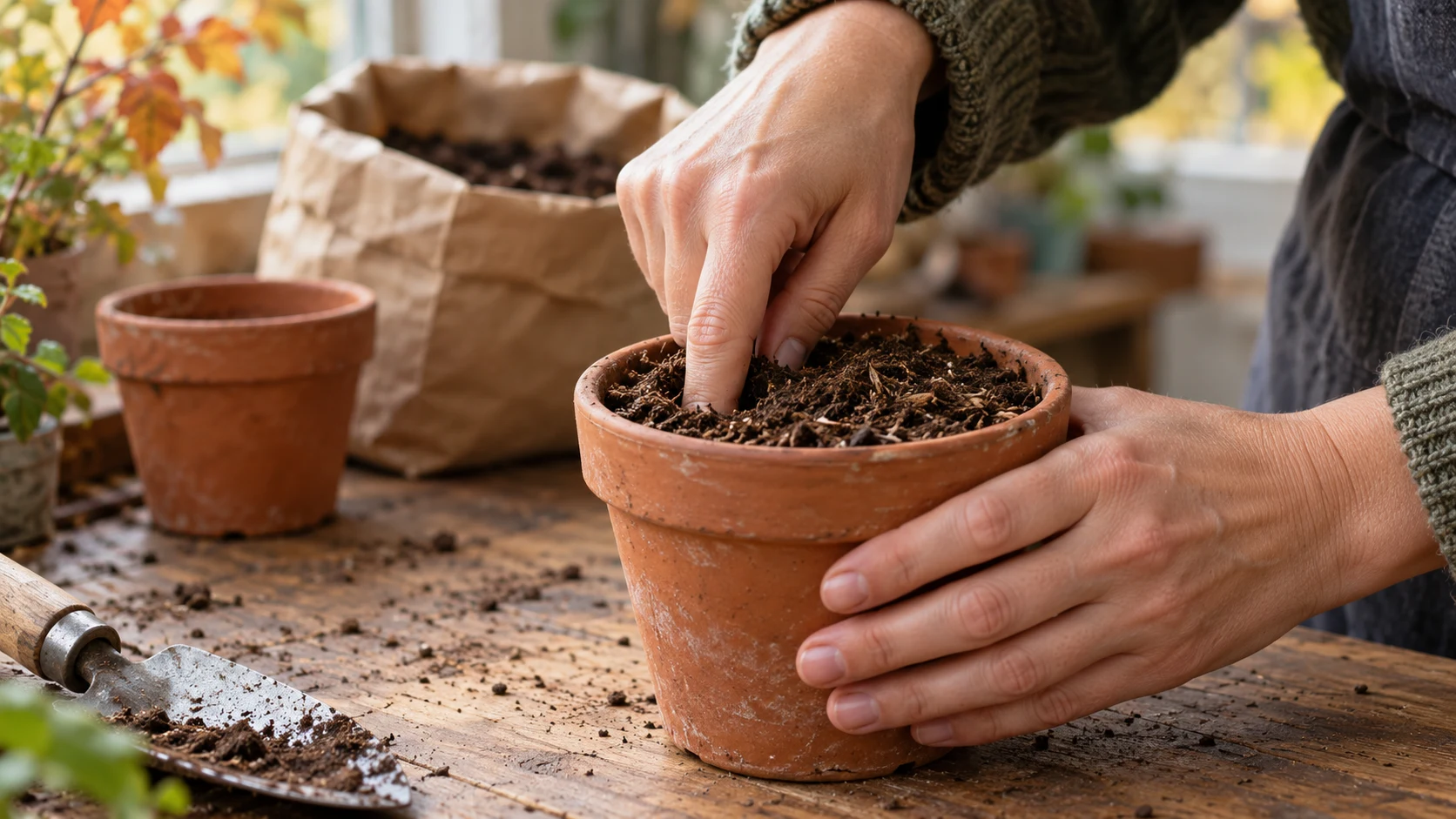
Peat-Free Compost: Choosing a Blend, Watering and Feeding
Choose peat-free compost for the plant and its purpose. Learn how to check moisture, read feeding instructions and avoid unnecessary extra fertiliser.
Choose peat-free compost for the plant and its purpose. Learn how to check moisture, read feeding instructions and avoid unnecessary extra fertiliser.
Quick answer: Scarify a lawn once a year, ideally in mid-spring or late summer to early fall, when the soil is moist but not soggy and the grass is actively growing. Set the blades 3–5 mm (about 1/8 inch) into the turf for light thatch, up to 8 mm (1/3 inch) for heavy moss. Aerate…
Quick answer: Prune cherry trees in summer, right after harvest, never during winter dormancy — dormant pruning sharply raises the risk of bacterial canker and silver leaf. Sweet cherries fruit on long-lived spurs and only need light, structural pruning once established. Tart (sour) cherries fruit mostly on one-year-old wood and need yearly renewal pruning, removing…
Quick answer: Most deciduous trees and shrubs are best pruned during their dormant season, late winter into early spring, before growth restarts. Spring-flowering shrubs like lilac and forsythia are the exception — prune them right after they finish blooming, or you’ll cut off next year’s flowers. Never remove more than about a quarter to a…
Quick answer: Prune apple trees during dormancy, from late autumn through early spring, ideally on a dry day above roughly 20°F (-6°C) so the wood isn’t brittle. Build an open, bowl-shaped crown by removing branches that grow inward or cross each other, cutting vigorous upright water sprouts back by about a third, and always cutting…
Quick answer: Shape gives it away. Round dead spots with a dark green ring around them are almost always dog urine. Large, uneven tan patches in July–August that spring back within a day or two of deep watering are drought stress. Circular patches with a smoky purple-gray border in hot, humid weather point to brown…
Quick answer: The summer pruning window runs roughly from midsummer through early autumn, once a tree or shrub’s most vigorous spring growth has slowed but while it still has enough of the growing season left to heal the cut. It suits deciduous ”bleeders” like maples, birches and dogwoods, most established shade trees, hedges, and stone…