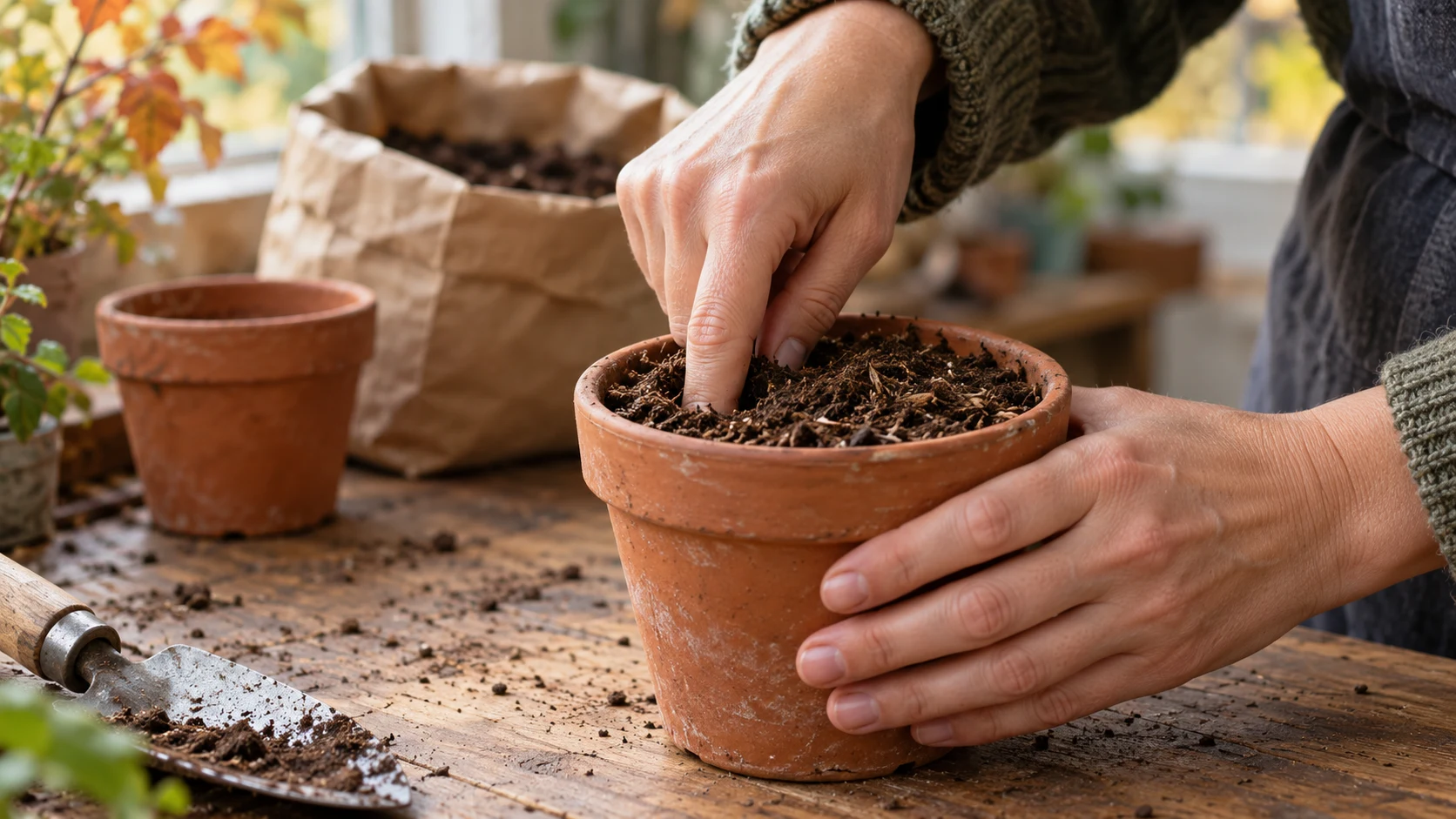
Peat-Free Compost: Choosing a Blend, Watering and Feeding
Choose peat-free compost for the plant and its purpose. Learn how to check moisture, read feeding instructions and avoid unnecessary extra fertiliser.
Choose peat-free compost for the plant and its purpose. Learn how to check moisture, read feeding instructions and avoid unnecessary extra fertiliser.
Quick answer: Mint is easy to grow and hardy in USDA zones 3–9, but it spreads fast through underground runners and can overtake a bed within a season. Grow it in a pot, or sink a bottomless container into the ground with the rim 2–4 in (5–10 cm) above soil level. Give it sun to…
Quick answer: Long flowering perennials fall into two camps. Nine species hold open flowers for 12 weeks or more on their own — catmint, Rozanne geranium, calamint and ’Goldsturm’ rudbeckia lead the list. The rest flower for six or seven weeks and repeat if you cut them back in early July. Mix both and you…
Quick answer: Prune currants in late fall after leaf drop or in early spring before bud break. Black currants should lose about a third of their oldest stems every year, cut right down to the ground. Red and white currants are kept and built up into a permanent framework instead, where you only shorten leaders…
Quick answer: Rosemary is only reliably hardy in USDA zones 8–10, so in zones 3–7 it’s grown as a container plant. Give it full sun, gritty well-drained soil, and water sparingly — rosemary is far more likely to die from overwatering than from underwatering. Overwinter it somewhere bright and cool, around 40–50°F (5–10°C), and it…
Quick answer: In USDA zones 3–6, citrus trees have to be grown in containers and moved indoors for winter — they can’t survive outdoors year-round. Keep the tree outside from late spring to early autumn, then overwinter it somewhere bright and cool, ideally 5–10°C (41–50°F). Water sparingly in winter and hold off on fertilizer until…
Quick answer: Growing lavender in zones 3–6 comes down to drainage, not warmth. Plant English lavender (Lavandula angustifolia) such as ’Munstead’, ’Hidcote’ or ’SuperBlue’ in full sun, in lean gravelly soil at pH 6.5–7.5, on a mound 20–30 cm (8–12 in) above grade. Mulch with gravel, never bark. Prune in spring once new green growth…