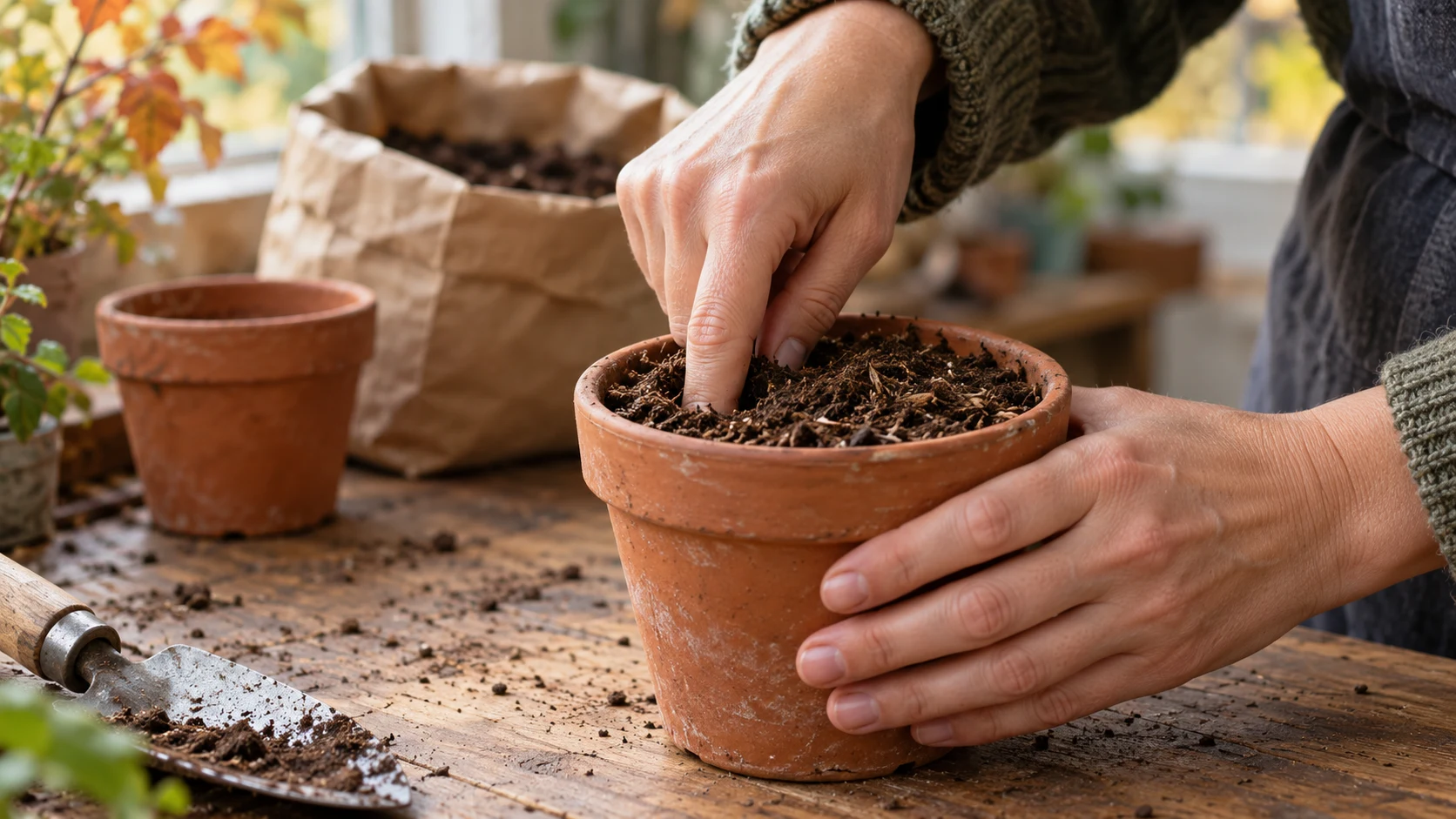
Peat-Free Compost: Choosing a Blend, Watering and Feeding
Choose peat-free compost for the plant and its purpose. Learn how to check moisture, read feeding instructions and avoid unnecessary extra fertiliser.
Choose peat-free compost for the plant and its purpose. Learn how to check moisture, read feeding instructions and avoid unnecessary extra fertiliser.
Quick answer: Worms in apples almost always mean apple maggots or codling moths. Apple maggot larvae are small, legless, and leave winding brown trails with no frass, while codling moth larvae chew one thick tunnel straight to the core and leave visible frass at the entry hole. Pick up dropped fruit every few days, hang…
Quick answer: Perennials for full sun split three ways by soil moisture, not by light. Dry sun suits yarrow, catmint, Russian sage, stonecrop and blue false indigo. Average soil suits coneflower, black-eyed Susan, daylily and blazing star. Moist sun suits bee balm, garden phlox and sneezeweed. Count on six hours of direct sun and full…
Quick answer: Storing apples successfully comes down to three things: pick them ripe but not overripe, handle them gently to avoid bruising, and keep them cold (around 0-4°C / 32-39°F), humid and dark. Wrap each apple separately in paper so they don’t touch, check the boxes every few weeks, and remove any that start to…
Quick answer: Shade perennials split three ways. Dry shade under trees suits bigroot geranium, barrenwort, Pennsylvania sedge and white wood aster. Moist shade on a north side suits hosta, astilbe, ostrich fern and bleeding heart. Deep shade against a wall suits pachysandra, Lenten rose, Solomon’s seal and foamflower. Water through the whole first season.
Quick answer: Plant berry bushes in fall (about six weeks before the ground freezes) or in early spring before the buds break. Dig a hole at least 16 in (40 cm) deep and wide, work compost into the backfill but keep fresh manure out of the hole, and space most bushes 3-5 ft (1-1.5 m)…
Quick answer: Catmint, Salvia nemorosa, sedum, Russian sage and lamb’s ear are among the most reliably drought-tolerant perennials for sunny gardens in USDA zones 3–6. Plant them in lean, fast-draining soil in full sun, water them like any new perennial for the first year, then taper off gradually. After one to two seasons they build…