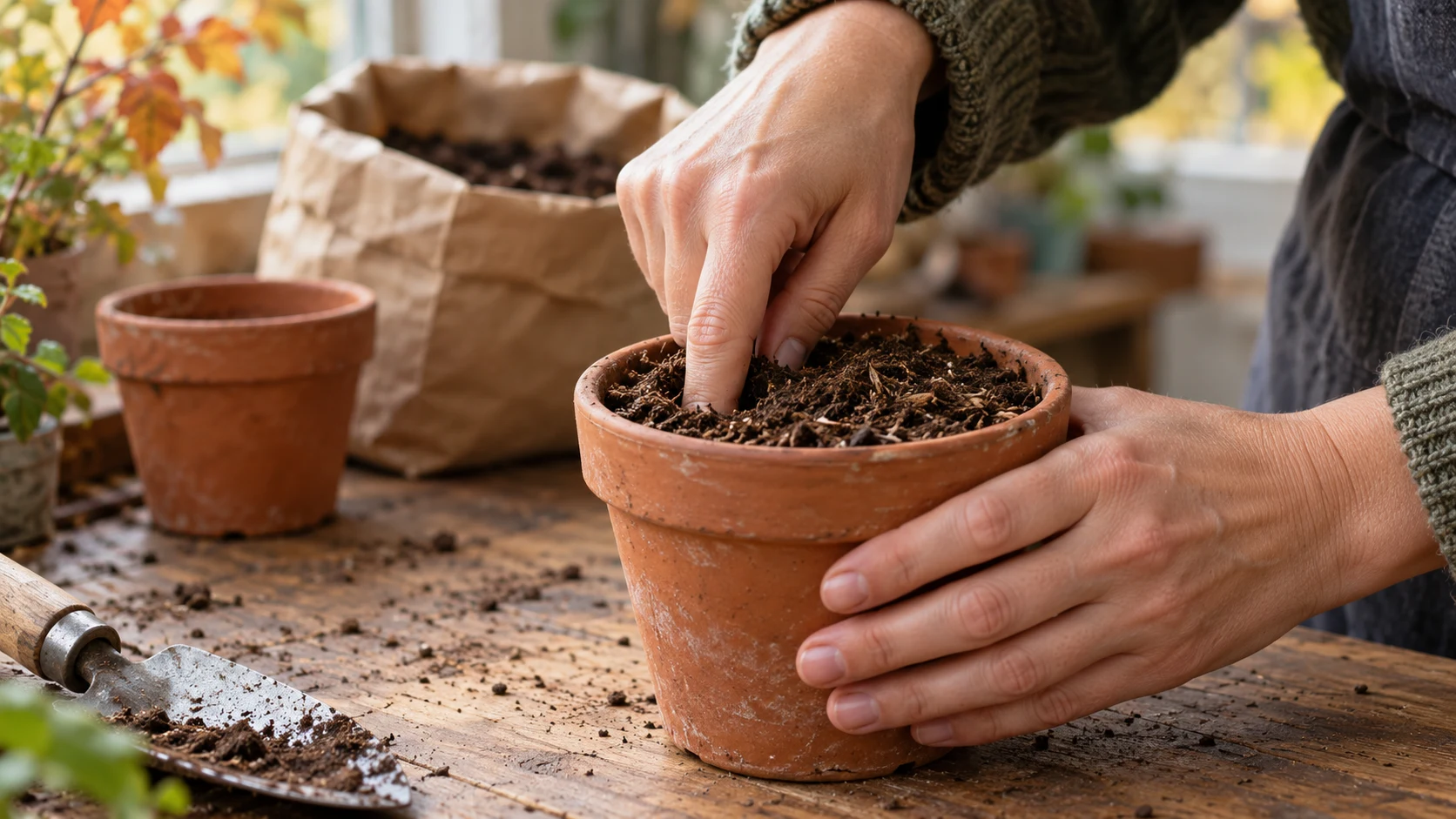
Peat-Free Compost: Choosing a Blend, Watering and Feeding
Choose peat-free compost for the plant and its purpose. Learn how to check moisture, read feeding instructions and avoid unnecessary extra fertiliser.
Choose peat-free compost for the plant and its purpose. Learn how to check moisture, read feeding instructions and avoid unnecessary extra fertiliser.
Quick answer: Growing herbs starts with one question – is the herb annual, biennial or perennial? Mediterranean herbs like rosemary and thyme want lean soil with 25 percent grit and water only once the pot has dried out. Leafy herbs like basil, parsley and dill want fertile soil and steady moisture. The two groups can…
Quick answer: Basil usually dies from overwatering and root rot, too little light, cold below about 50°F (10°C), or from being sold as a dozen crowded seedlings in one small pot. Check the soil and roots before doing anything else, move the plant somewhere brighter and warmer, and separate an overcrowded pot immediately. If the…
Quick answer: Sow parsley seed about 1/4 inch (6 mm) deep in rich, well-drained soil from early spring through midsummer. Germination takes 3–4 weeks and needs consistently moist soil the entire time. Keep the soil evenly damp, harvest the outer stems first, and feed container plants lightly. Parsley is biennial but almost always grown as…
Quick answer: Growing blueberries comes down to soil pH. They need 4.0–5.5, ideally 4.5–5.2. Plant into an ericaceous mix or sphagnum peat, about 100 litres (26 US gal) per bush, spaced 90–120 cm (3–4 ft) apart. Plant two varieties for cross-pollination, water with rainwater, and mulch 5–10 cm (2–4 in) deep.
Quick answer: Sow dill directly where it will grow, about 1/2 inch (1 cm) deep, in well-drained soil from mid-spring through midsummer. Dill dislikes transplanting because of its taproot, and it bolts easily under heat, drought or other stress. Sow in batches every 2–3 weeks for a steady leaf harvest, and pinch off flower buds…
Quick answer: Blueberries need acidic soil, pH 4.0–5.5 and ideally 4.5–5.2, while most garden soil sits between 6.0 and 7.5. Replace the planting area with an acidic mix of peat and pine bark fines, or lower pH gradually with elemental sulfur applied 6–12 months ahead of planting. Test first, then plan on maintaining acidity for…