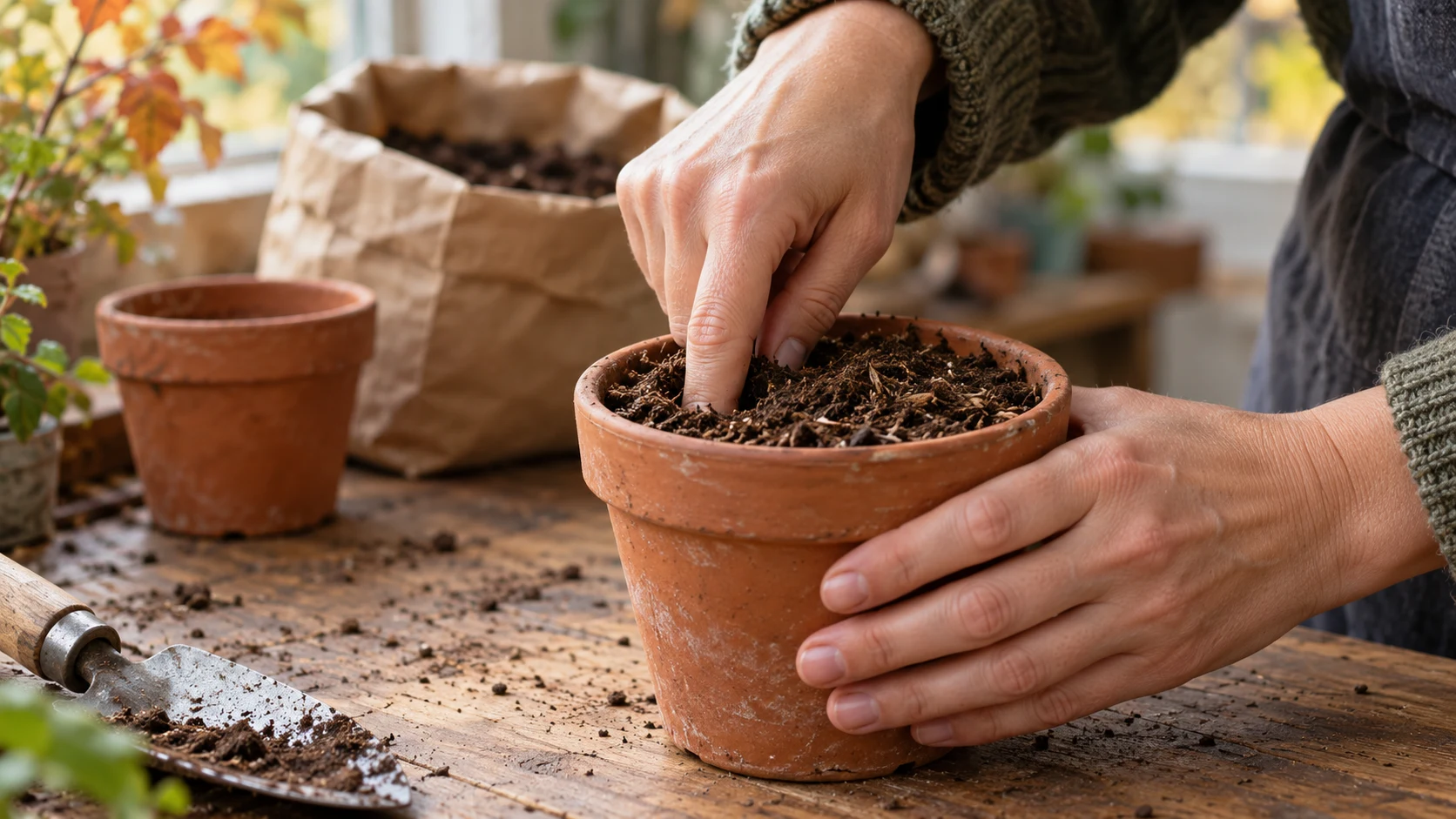
Peat-Free Compost: Choosing a Blend, Watering and Feeding
Choose peat-free compost for the plant and its purpose. Learn how to check moisture, read feeding instructions and avoid unnecessary extra fertiliser.
Choose peat-free compost for the plant and its purpose. Learn how to check moisture, read feeding instructions and avoid unnecessary extra fertiliser.
Good lawn care comes down to four numbers: mow at 6–9 cm (2.5–3.5 in) and never remove more than a third of the blade, apply no more than 0.5 kg nitrogen per 100 m² (1 lb per 1,000 sq ft) in one go, water 25 mm (1 in) a week instead of a little every…
Quick answer: Pruning depends on the group. Group 1 needs almost no cutting, just light shaping right after flowering. Group 2 gets a light trim in late winter plus deadheading after the first flush. Group 3 gets cut back hard to 8–12 in (20–30 cm) every late winter, which is what keeps it blooming well…
Quick answer: sow grass seed once the soil has warmed to at least 8–10°C (46–50°F), ideally in late summer to early autumn or, second best, in mid-spring. Use roughly 35–50 g per square metre (about 3–4.5 lb per 1,000 sq ft) for bare soil, rake it in no deeper than 1 cm (0.4 in), keep…
Quick answer: Match the plant to how it actually climbs. English ivy, Virginia creeper and climbing hydrangea cling on their own with aerial roots or holdfasts, so they suit solid brick or stone. Wisteria, honeysuckle and silver lace vine twine around a sturdy trellis or beam. Clematis and grapes grip with thin tendrils on wire…
Plant flower bulbs two to three times the bulb’s own height deep: 8 cm (3 in) for crocus, 15–18 cm (6–7 in) for tulips and daffodils. Fall bulbs go in from late August to late October, summer bulbs in late May. Bulb size is circumference, so a 12/14 cm daffodil flowers the first year and…
Feed the lawn two to three times a year: a spring application once growth is underway, an optional light summer feed in midsummer, and a potassium-heavy autumn feed no later than early September for cooler zones. Apply no more than 0.5 kg nitrogen per 100 m² (1 lb per 1,000 sq ft) per application, and…