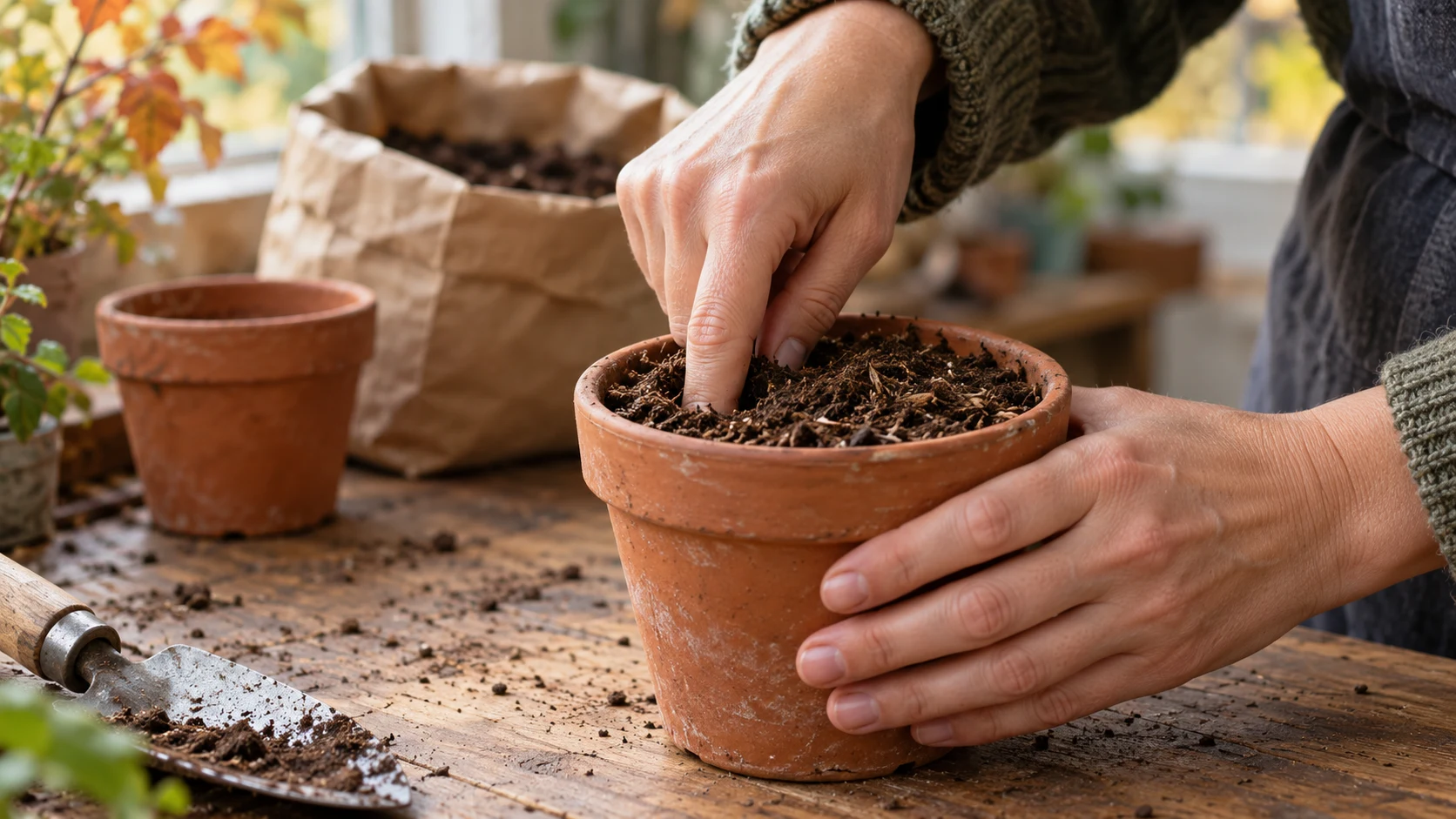
Peat-Free Compost: Choosing a Blend, Watering and Feeding
Choose peat-free compost for the plant and its purpose. Learn how to check moisture, read feeding instructions and avoid unnecessary extra fertiliser.
Choose peat-free compost for the plant and its purpose. Learn how to check moisture, read feeding instructions and avoid unnecessary extra fertiliser.
Quick answer: Most microgreens are ready to harvest 7–21 days after sowing. Sow seed thickly into moist seed compost or a growing mat, keep it dark and damp for 3–5 days until it germinates, then move the tray into bright light and water from below until the first true leaves appear.
Quick answer: Strawberries in containers need at least 20 cm (8 in) of soil depth and 4–5 liters (1–1.3 gal) of potting mix per plant, full sun, and daily watering during flowering and fruiting in warm weather. Use a well-draining potting mix, feed with a potassium-rich liquid fertilizer every two weeks, and protect the pot…
Quick answer: Start basil indoors 6–8 weeks before your last frost, sowing on the surface or barely covered because the seed needs light, and hold 20–25 °C (68–77 °F) for germination in 5–10 days. Basil wants 6–8 hours of sun, a pot at least 20 cm (8 in) wide and deep, water from below, and…
Quick answer: Use solar lights for easy, no-wiring accents, a 12-volt low-voltage system for reliable lighting along paths and beds, and a hardwired 120-volt circuit installed by a licensed electrician for permanent fixtures like floodlights and facade lighting. Stick to one color temperature (2700-3000K) throughout the yard, and choose IP44 or higher for anything outdoors.
Quick answer: In March, start tomato, pepper and eggplant seeds indoors, chit your seed potatoes, and prune apple and pear trees on frost-free days once the ground has thawed. Hold off on fertilizing the lawn, planting out anything tender, or pruning spring-flowering shrubs. In USDA zone 3–4 the ground is often still frozen most of…
Quick answer: Growing raspberries needs full sun and free-draining soil at pH 5.5–6.5. Set canes 45–60 cm (18–24 in) apart, in rows 1.5–2 m (5–6.5 ft) apart, on wires at 60 and 120 cm (2 and 4 ft). Prune summer-bearing canes after harvest; cut fall-bearing canes to the ground. Expect 1.5 kg per metre (1…