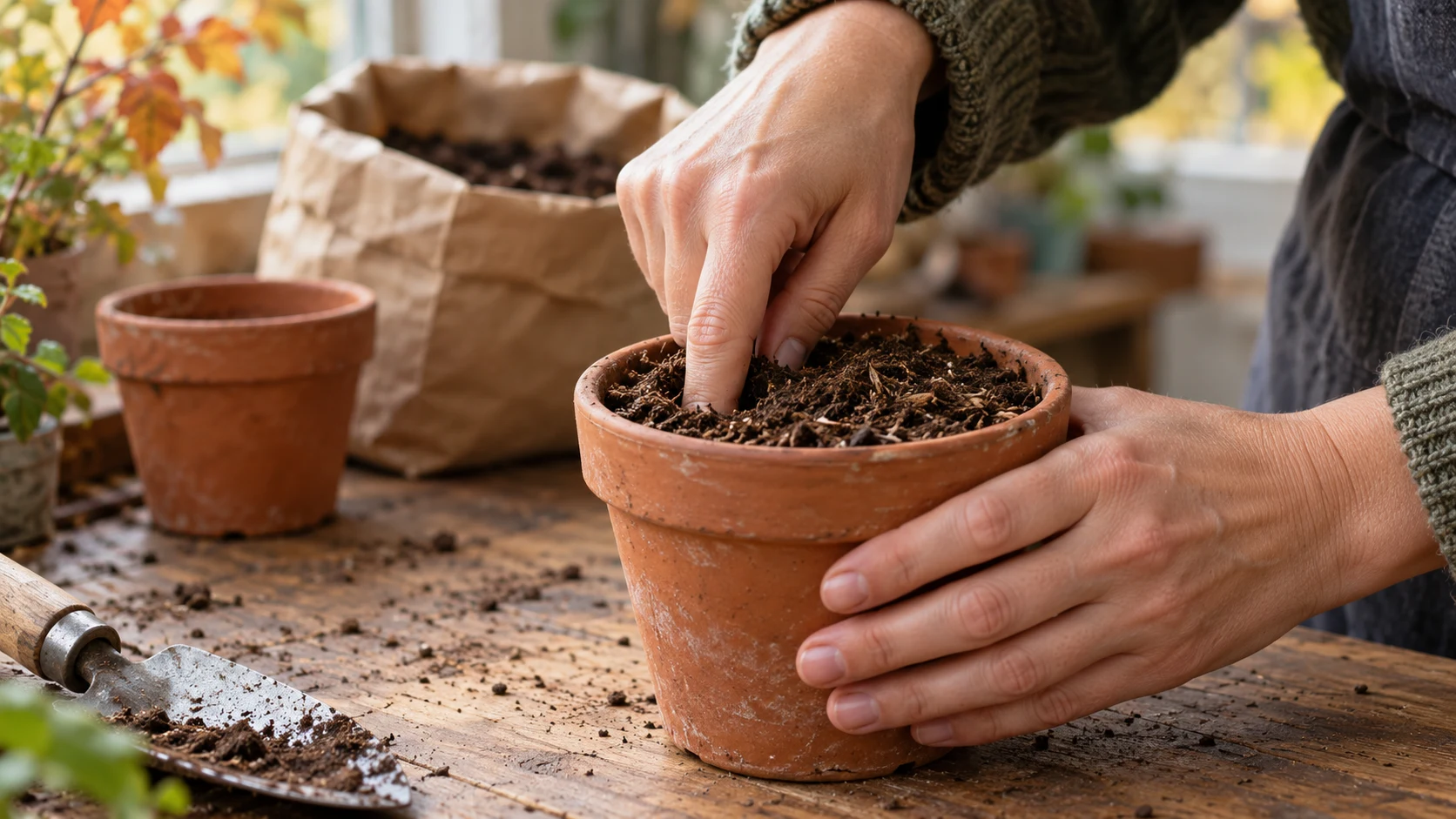
Peat-Free Compost: Choosing a Blend, Watering and Feeding
Choose peat-free compost for the plant and its purpose. Learn how to check moisture, read feeding instructions and avoid unnecessary extra fertiliser.
Choose peat-free compost for the plant and its purpose. Learn how to check moisture, read feeding instructions and avoid unnecessary extra fertiliser.
Quick answer: Shelter traps – a damp board or lid slugs crawl under for cover – catch more slugs than beer traps and are the easiest to maintain. Plan on roughly one trap per 3–5 square metres (30–55 sq ft) in a badly hit bed, and check it every two to four days. Beer traps…
Quick answer: Attracting birds to your garden comes down to three things that need to work year-round: food, water and shelter. Plant berry-producing shrubs and a dense, thorny hedge, put out a shallow bird bath, keep cats indoors at dawn and dusk, and add supplemental feeding plus a nest box or two. Most gardens see…
Quick answer: Most poinsettias die from overwatering or a cold snap, not from neglect. Let the soil dry slightly between waterings, never let the pot sit in standing water, and keep it away from cold drafts and windows below 12°C (54°F). Cared for properly, a poinsettia stays attractive for two to four months — well…
Quick answer: Yellow leaves on a tomato plant are usually caused by natural aging of the lowest leaves, inconsistent watering, or a nutrient shortfall — most often nitrogen or magnesium. Check where the yellowing sits and how it’s shaped: a few old leaves at the bottom is normal, while yellowing that spreads fast, shows up…
Quick answer: Bigleaf and mountain hydrangeas change color based on soil pH and aluminum availability. Below pH 5.5, blooms turn blue; above pH 6.5, they turn pink. Lower pH with acidifying soil, mulch and aluminum sulfate for blue; raise it with garden lime for pink. A full, stable color shift usually takes one entire growing…
Quick answer: Greenhouse tomatoes grow faster and yield more than outdoor plants, but the enclosed space changes the rules. Keep daytime temperatures around 20–26°C (68–79°F), nights no lower than 13–15°C (55–59°F) if you can help it, water evenly at soil level, vent the structure the moment it heats up, and hand-pollinate the flower trusses since…