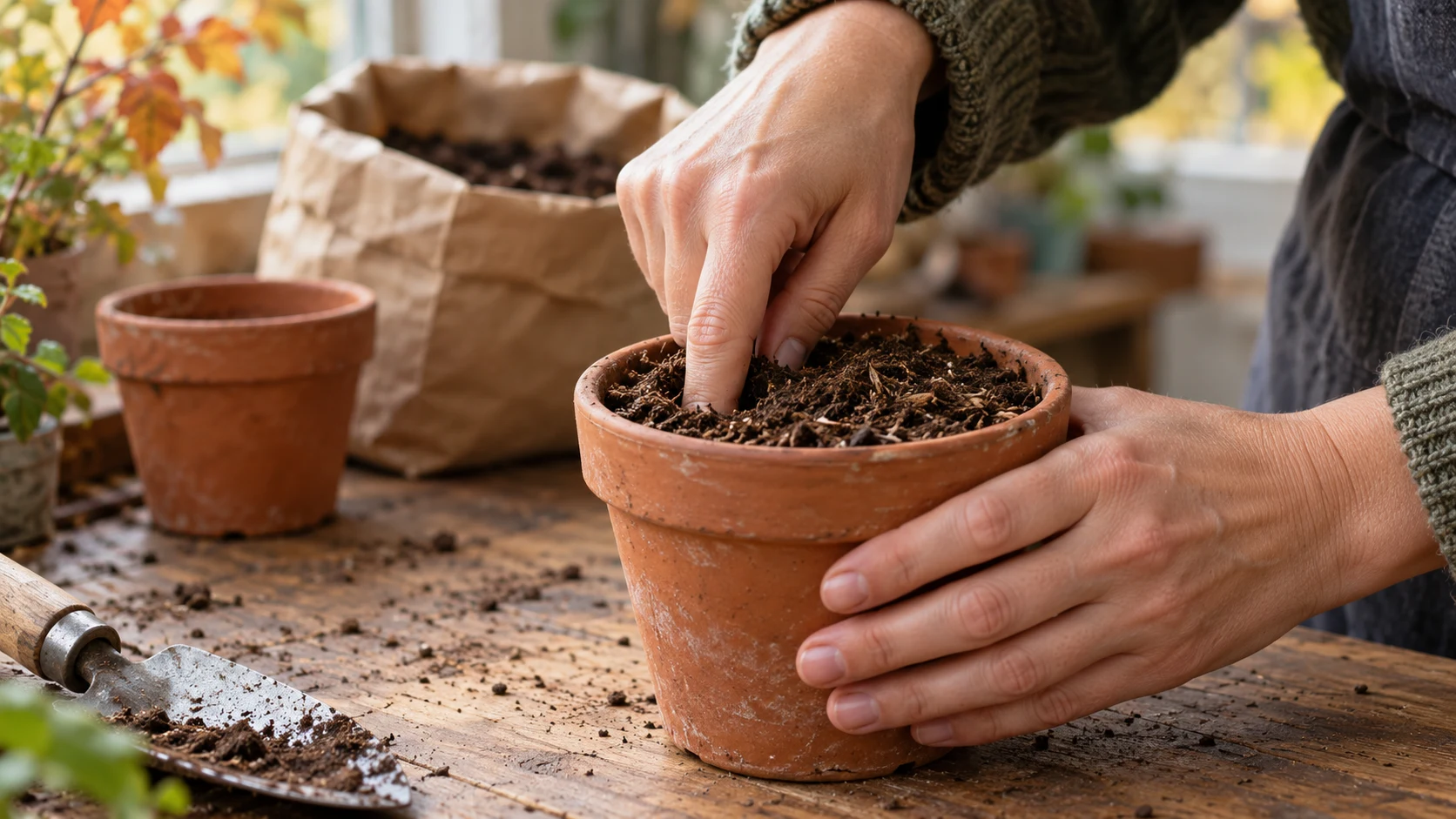
Peat-Free Compost: Choosing a Blend, Watering and Feeding
Choose peat-free compost for the plant and its purpose. Learn how to check moisture, read feeding instructions and avoid unnecessary extra fertiliser.
Choose peat-free compost for the plant and its purpose. Learn how to check moisture, read feeding instructions and avoid unnecessary extra fertiliser.
Quick answer: Crop rotation means moving each plant family to a different bed every year and leaving at least three to four years before that family returns. Brassicas need six to seven years because of clubroot. The classic order is legumes, then brassicas, then potatoes, then roots and onions last.
Quick answer: Plant asparagus crowns in spring in deeply worked, well-drained soil, about 10 cm (4 in) deep with 30–40 cm (12–16 in) between plants. Skip harvesting for the first two years so the plant can build a strong root system — from year three you can start cutting spears through early summer. The payoff…
Quick answer: Growing tomatoes in pots works well on a balcony if the container is big enough. Allow at least 19 litres (5 gal) for a bush variety and 26–38 litres (7–10 gal) for a tall one. Give the plant 6–8 hours of sun, shelter from wind, daily water in heat, and a high-potassium feed…
Quick answer: Start pumpkin seeds indoors 3–4 weeks before your last frost, or direct-sow outdoors once the soil has warmed to at least 15°C (60°F). Give plants 1–3 m (3–10 ft) of room depending on variety, rich soil and at least six hours of sun. Pumpkins take 90–120 days from seed to a mature fruit,…
Quick answer: Sow peas directly outdoors as soon as the soil can be worked and has warmed to around 5–10°C (40–50°F), usually 4–6 weeks before your last frost date. Plant seeds 3–4 cm (1.5 in) deep, 5–7 cm (2–3 in) apart, give climbing varieties something to grip early, and pick pods often to keep new…
Quick answer: Hold off on liquid fertilizer until your tomato plant sets its first flower cluster, usually 2–4 weeks after transplanting — the starter feed already in the soil covers it until then. After that, feed every week or two with a fertilizer that leans harder on potassium as the season goes on, and stop…