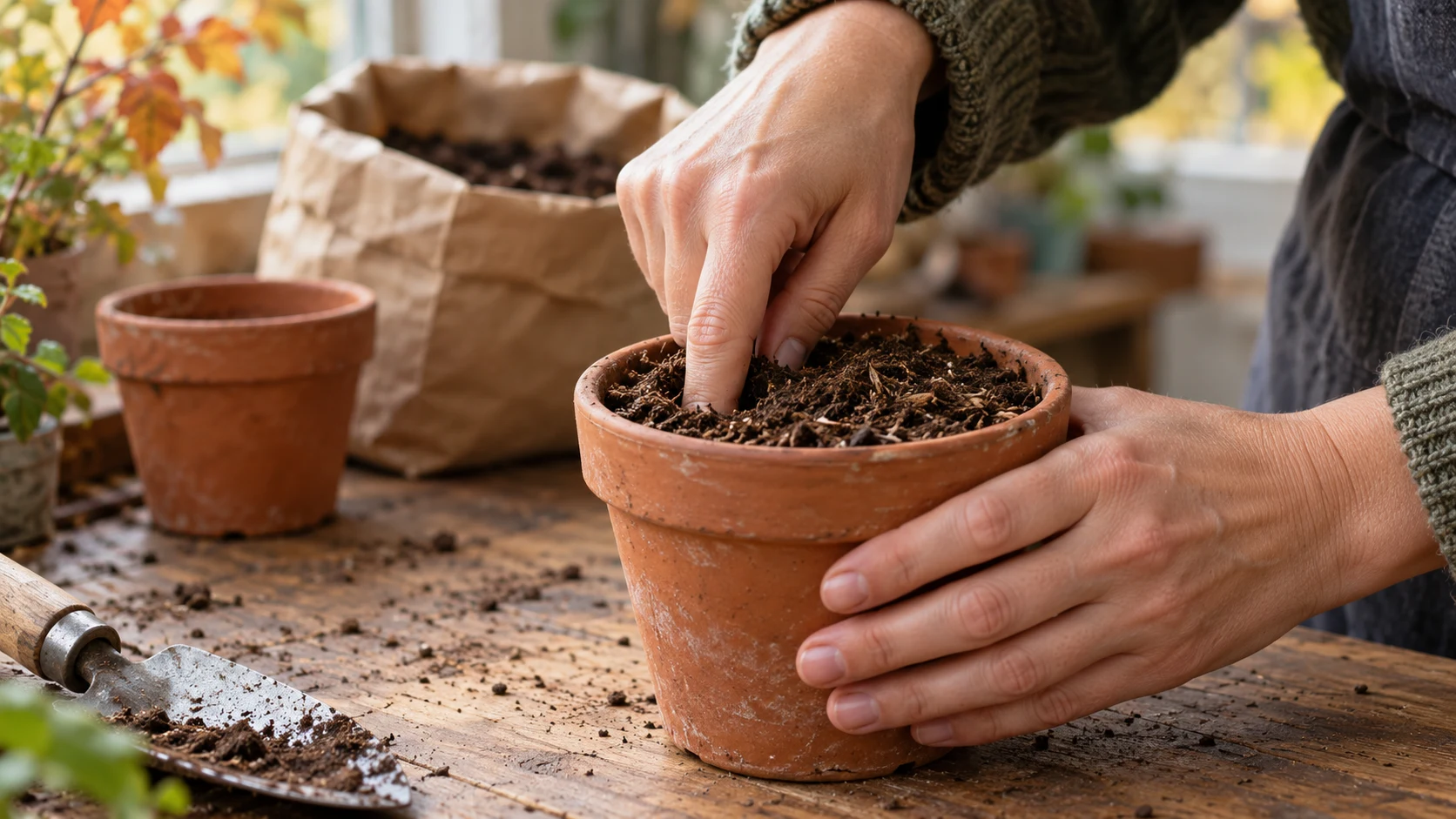
Peat-Free Compost: Choosing a Blend, Watering and Feeding
Choose peat-free compost for the plant and its purpose. Learn how to check moisture, read feeding instructions and avoid unnecessary extra fertiliser.
Choose peat-free compost for the plant and its purpose. Learn how to check moisture, read feeding instructions and avoid unnecessary extra fertiliser.
Quick answer: Permaculture is a way of designing your garden so it does more of its own work over time, through perennial plants, soil that’s always covered, and water that stays on site instead of running off. Start small: build one guild bed of about 5–10 square meters (55–110 sq ft) in year one instead…
Quick answer: Plan on roughly 100–200 square meters (1,100–2,150 sq ft) per person to cover your vegetable needs year-round, including storage crops like potatoes and root vegetables. Add fruit, berries and eggs and you’re closer to 450–750 square meters (4,800–8,000 sq ft) per person. Meat, dairy and grain push that into the thousands of square…
Quick answer: In USDA zone 3 the safest picks are Haralson, Wealthy, State Fair and Sweet Sixteen. Zone 4 opens up Honeycrisp, Zestar!, Liberty and Northern Spy. Scab-immune Liberty, Freedom and Enterprise cut spraying to almost nothing. Plant two varieties with overlapping bloom, and check the rootstock before the variety.
Quick answer: Harvest root vegetables after the first light frosts but before the ground freezes hard, brush off the soil instead of washing it, and let cuts and scrapes dry before storing. Keep most roots cold and humid — around 0–4°C (32–40°F) with high humidity — while potatoes prefer it slightly warmer and onions need…
Quick answer: Most vegetable garden mistakes come down to never rotating crops, sowing or planting too close together without thinning, feeding every crop the same way, and leaving beds empty as soon as something is harvested. Rotate by plant family every 3–4 years, thin early, match fertilizer to leafy, root or fruiting crops, and resow…
Quick answer: The best seed compost is low in nutrients, fine-textured and free-draining — the opposite of ordinary potting soil. Look for products labelled ”seed starting mix” or ”seed compost” with little or no added fertiliser, check the ingredient list rather than the marketing on the front, and choose peat-free or peat-reduced if sustainability matters…