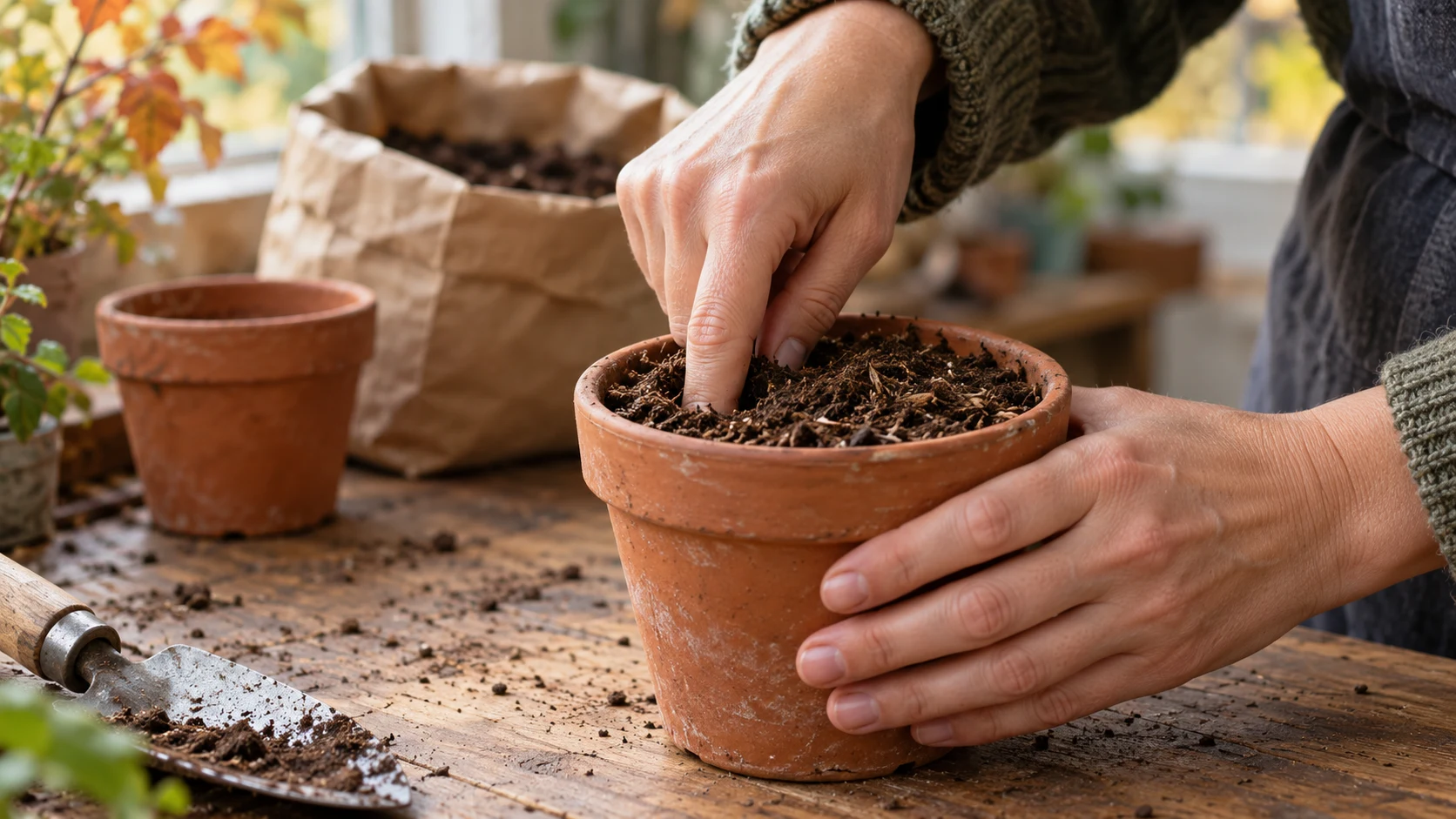
Peat-Free Compost: Choosing a Blend, Watering and Feeding
Choose peat-free compost for the plant and its purpose. Learn how to check moisture, read feeding instructions and avoid unnecessary extra fertiliser.
Choose peat-free compost for the plant and its purpose. Learn how to check moisture, read feeding instructions and avoid unnecessary extra fertiliser.
Quick answer: Aloe vera wants bright light without hours of harsh, direct midday sun, and should only be watered once the soil is completely dry — roughly every two to three weeks in summer and once a month or less in winter. Overwatering combined with dense soil is the most common cause of death. If…
Quick answer: Snake plants want bright light but tolerate low light surprisingly well, and should only be watered once the soil is completely dry — roughly every 3–4 weeks in summer and once a month or less in winter. Overwatering in dense, slow-draining soil is by far the most common cause of death. Propagate by…
Quick answer: No, a houseplant or two won’t meaningfully clean the air in a normal room. The claim traces back to a NASA study run inside a sealed lab chamber, and later research shows you’d need anywhere from dozens to well over a thousand plants per square metre (roughly 100 per square yard) to match…
Quick answer: The most common pruning mistakes are cutting at the wrong time of year, using dull tools, placing the cut in the wrong spot, damaging the branch collar, topping trees, and removing too much at once. Almost all of them are avoidable once you know whether your plant blooms on old or new wood,…
Quick answer: Water thoroughly the day before you leave, move sensitive pots into shade, and group them close together. Most container plants survive a week with a simple wicking system or a plastic bottle with holes in the cap. For trips longer than two weeks, use timer-controlled drip irrigation or ask a neighbour to help.
Quick answer: Match plants to the light – geraniums, petunias and verbena for sun, fuchsia, begonia and trailing lobelia for shade. Use a basket holding at least 8-10 liters (2-2.5 gal) of soil, water daily once it’s warm until it runs out the bottom, and feed every one to two weeks with a potassium-rich fertilizer.